Wednesday, November 2, 2022

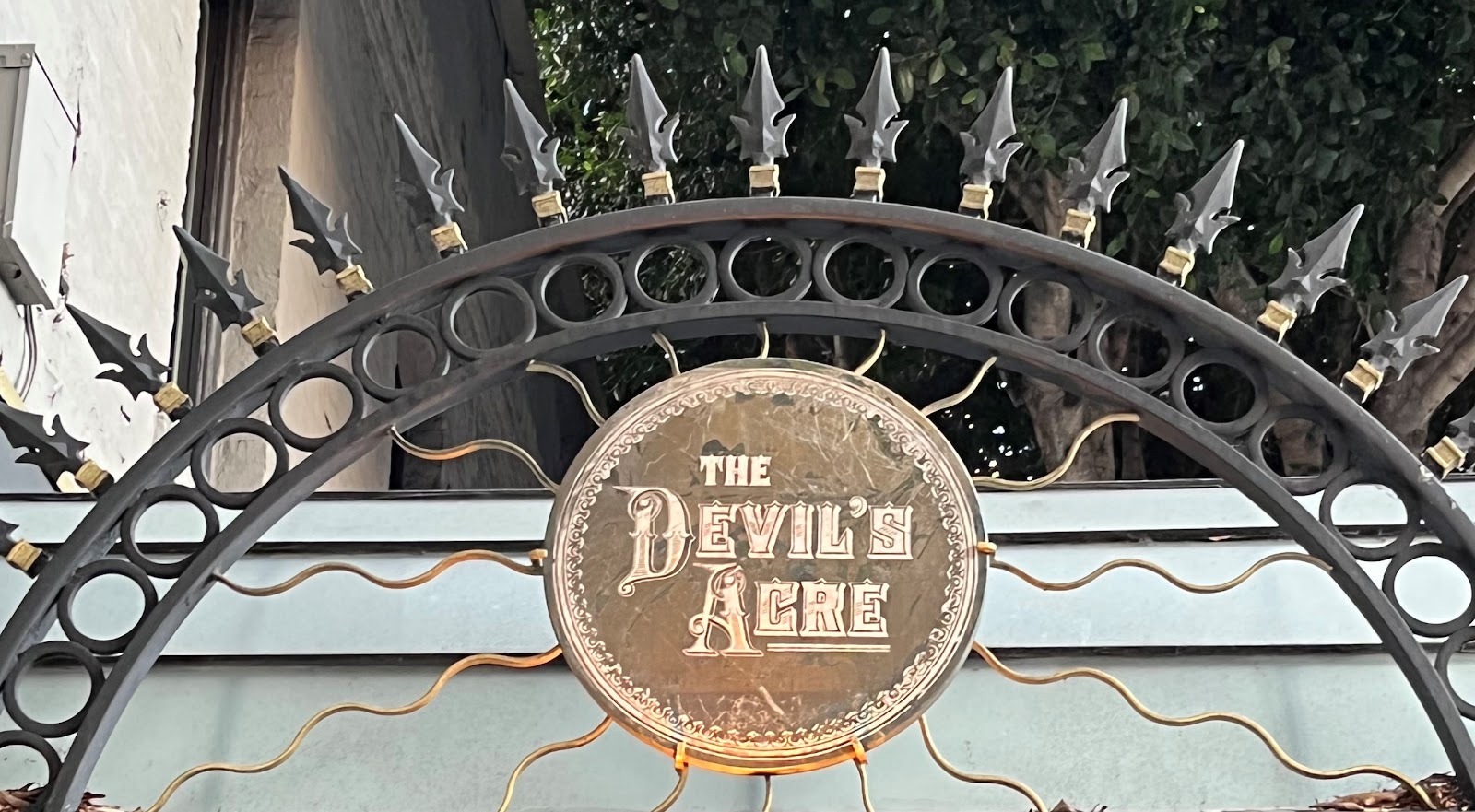
The Devil’s Acre – Heart of the Barbary Coast

 Before the discovery of gold in 1849, San Francisco (or Yerba Buena as it was known until 1847) was a sleepy community. The Custom House was one of the few wood-framed structures. The Harbor Master’s Office sheltered under a canvas tent made from a ship’s sails. Centered around what is now Portsmouth Square, the rest of the “city” was a collection of tents, shanties, and adobe buildings along the edges of Yerba Buena Cove. Two and a half miles from the cove stood a Spanish-era mission. With a population of only a few hundred, San Francisco sat on the finest natural harbor on the West Coast. At one point, there were more pigs in the city than people.

Gold changed everything as the “world rushed in”. Hoards of fortune seekers made their way to California. San Francisco was now filled with thousands of young men, living in hotels, and loaded with money. They were looking for food, drink, gambling, camaraderie, and bawdy entertainment. Many early immigrants opened restaurants, especially the Chinese. Others opened gambling halls and saloons.

Hot on the heels of the 49ers, sex workers from around the world began to arrive. They were American, English, Chinese, German, Spanish and French. In 1850 alone, 2,000 women, mostly harlots, arrived. Perhaps the first to arrive were woman from Chile. American prejudices forced these Spanish-speaking immigrants to heddle together in a small district known as Little Chile. These pioneer prostitutes worked out of tents and crude wooden structures near Broadway and Pacific Street. The seeds of the Barbary Coast were sowed. The local newspaper described the area as “a bawdy, bustling, bedlam of mud holes and shanties”.

From humble, and carnal, beginnings the Barbary Coast was born. In the mid-1860, a visiting sailor stood up in a saloon and proclaimed, “Here’s to the Barbary Coast, where if the whiskey doesn’t knock you out, the harlots and hoodlums will.”

The name referred to the pirate-infested coast of North Africa and it stuck!

Between 1870 and through the 1890s, the Barbary Coast grew to encompass 40 square blocks. It was roughly boarded by the Embarcadero to the east, Grant Avenue on the west, Broadway to the north and Commercial Street to the south. It acquired a world-wide reputation as “the most naughty and dangerous district in America”.

In 1890, the area was home to 3,117 businesses licensed to sell “beer, whiskey, and other intoxicating beverages”. That was one saloon for every 96 San Franciscans (today in all of San Francisco it’s 1/700). Along with the legal establishments, there were at least 2,000 unlicensed “Blind Pigs”. During Prohibition, these would be known as speakeasies. “Drinking was such a fact of life that it was certainly considered no disgrace to frequent a saloon, which the entire male populace did without embarrassment.”

After drinking, gambling was seen as the principal diversion for the men of San Francisco, young and old alike. By 1860, there were 1,000 gambling halls open to fill the need. The Barbary Coast was an “orgy of wasteful and extravagant spending”. A newspaper editorial noticed that “the men of San Francisco who did not gamble were too few to be noticed.” It was well known that “San Francisco’s politics had never suffered from undue concern with honesty.”

Respectful elements of local society were content to ignore the crime, gambling, brothels and drinking establishments. This “ulcer of depravity” had become “a world-famous theme park of sin” which judges, lawyers, government officials, clergymen, and the city’s middle class visited on a regular basis. “Civic virtue was as rare as a snowstorm.”

At the heart of the Barbary Coast was a little triangle of the city where Columbus Avenue intersects with Broadway, Kearny Street and Pacific Avenue. It’s wicked and wild. It’s the Devil’s Triangle. This “bubbling cauldron of sin” had the highest concentration of dancehalls, deadfalls (beer & wine dens), gambling halls, melodeons (saloons with burlesque shows), and brothels. It was vicious, depraved, and glamorous all at once. Sarah Bernhardt, the most famous actor of the late 19th century called it, “the most fascinatingly wicked place on earth.”

Everyone was welcome and they flocked to this “seductive siren”. Along Kearney Street alone you could find Hell’s Kitchen, Cock o’ the Walk, the Dew Drop Inn and many other colorfully named watering holes. One of the most famous saloons was the Bull Run. Its motto was “anything goes here”. Being at the center of a “wild sirocco of sin”, one can only imagine what was included in “everything”.

The Devil’s Acre is also considered ground zero for the cocktail culture in America. In a city built on gold and drink, what better way to pass the time than with a bright, bitter, and boozy creation? Yes, bitter. Bitter over sweet was seen as a sign of affluence. Enjoying delicious, intoxicating beverages is at the core of the human experience. Sharing a drink builds community and group solidarity.

Mixing cocktails grew out of a bartender’s need to create a drink that tasted like whiskey without using much whiskey. A way to cheat customers bloomed into the creation of the mojito, the world’s first cocktail. Other famous local creations include Pisco Punch, the Sazerac. Not the Martini, but that’s another HEAD Trip.

The Gold Rush, Barbary Coast and Devil’s Acre helped San Francisco earn its place among the world’s six great cocktail cities (London, Havana, New York, Paris, New Orleans & SF). As you sip your drink in Baghdad by the Bay, you’re tasting California history.

Cheers!


Friday, September 23, 2022

 We're back!

The pandemic and Trump's presidency took their toll on many things; democracy, science, and the HEAD Society. HEAD Trips and HEAD Rushes, except for a SantaCon or two, all fell victim to Shelter-in-Place. The light at the end of the tunnel is no longer a train heading our way. HEAD is back baby, vaccinated and boosted AF. No more Zoom meetings or Teams calls, it's time for real adventures.

For those of you new to such things, the HEAD Society (Historical Eating and Drinking Society) is an informal band of merry explorers who are dedicated to the lifelong quest for historical foods, good drink, friendship, and the hunt for tasty knowledge. 


Our first post-COVID excursion is planned for Saturday, November 5, 2022. Mark your calendars now, in ink! We'll be exploring San Francisco's storied Devil's Acre. This amazing triangle was once the wildest single block in the world and the epicenter of the old Barbary Coast.


Great cocktails are a much a part of San Francisco as cable cars and Carl the Fog. Some say cocktail culture was born in the City. If San Francisco is the birthplace, the Devil's Acre is the fallopian tube.


Details to follow.

Wednesday, July 20, 2016

MINOR LEAGUE BASEBALL – AMERICA’S HOMETOWN GAME

The history of Minor League Baseball goes back to September 5, 1901, when the National Association of Professional Baseball Leagues was formed. Today we know them as Minor League Baseball. It all started with 14 leagues and 96 clubs. By 1909, things had grown to 35 leagues and 246 clubs.
The Minors really began to flourish during the Great Depression when the teams got their “farm team” nickname. It started as a joke passed around by major league players when St. Louis Cardinals general manager Branch Rickey formalized the system, and said these small town teams were "growing players down on the farm like corn."
Minor League Baseball is a place to develop talent and prepare players for the majors, “the Show”, MLB. Today, 19 affiliated minor baseball leagues operate with 244 member clubs in large, medium, and small cities, as well as the suburbs across the U.S., Canada, Mexico and the Dominican Republic. Several more independent leagues operate in the United States and Canada.
Minor League teams are usually independently owned and operated but are directly affiliated with one of the major league teams. Today’s farm system has a complex set of layers that take young, raw talent and get it “Big League” ready.


Triple-A
This classification currently includes two affiliated leagues: the International League and the Pacific Coast League. The Mexican League is also classified as a Triple-A league, though its clubs are not affiliated with MLB clubs.

Double-A
There are currently three leagues in this classification: Eastern League, Southern League and the Texas League,
 

Class A-Advanced
One level below Double-A, the California League, Carolina League and the Florida State League play at the Class A-Advanced level. 

Class A
Slightly below Class A-Advanced are the full (140 game) season Class-A leagues.

Class A Short Season
Class A Short Season, despite sharing the "Class A" designation, is, in fact, a separate classification from Class A. Short season leagues, as the name implies, play a shortened season of 76 games, starting in mid-June and ending in early September.
Rookie Advanced
The players in these leagues are thought to be further along in their development than players in the pure Rookie leagues, and hence games are more competitive.

Rookie
Leagues in the Rookie classification play a shortened season, similar to, but slightly shorter than, the short season leagues, starting in mid-June and ending in late August or early September. This is the lowest level of minor league baseball.  

SF GIANTS FARM SYSTEM
AA
Advanced A
A
Short Season A
Rookie
Arizona Giants

OAKLAND A’S FARM SYSTEM
Double-A
Advanced
A
A
Short-Season A
Rookie

The San Jose Giants’ mission is to "provide fun, affordable, family entertainment to our community, while continually striving for unprecedented success on and off the field. The organization is dedicated to creating an environment where players can develop their baseball skills and learn the humble art of giving back and becoming a Giant. The San Jose Giants welcome every fan and take pride in maintaining our cherished home, Municipal Stadium, as a community gathering place since 1942."
 Minor League teams have some of the best names in sport. Wouldn't you like to root for the El Paso Chihuahuas, Carolina Mudcats, Hartford Yard Goats or the Las Vegas 51s (as in Area 51). There really are Toledo Mud Hens of M*A*S*H fame. A few other favorites include the Lansing Lugnuts, Hillsboro Hops (yes, those hops) and Homer Simpson's fav Albuquerque Isotopes.

SAN JOSE GIANTS FUN FACTS
·         The San Jose Giants are in the Class A Advanced California League. The team has been affiliated with the San Francisco Giants since 1988 and has boasted one of the best records in the minor leagues after partnering with the big league club, going 2,098-1,673 (.556). The San Jose Giants have played in historic Municipal Stadium for over 70 years.  San Jose has won six California League Championships as a Giants affiliate and eleven overall (2010, 2009, 2007, 2005, 2001, 1998, 1979, 1967, 1962, 1953 and 1949). In 27 seasons, the San Jose Giants have graduated 173 Major League players, 125 of whom have played or currently play for the San Francisco Giants. 16 former San Jose Giants took part in the 2014 World Champion San Francisco Giants playoff run.

·          Since 1988, the San Jose Giants have entertained over 4 million fans. 

·         The San Jose Giants have extensive partnerships with local schools, youth sports organizations and non-profits. More than $300,000 is raised annually for South Bay organizations.   

·         Current Giants Buster Posey, Madison Bumgarner, Trevor Brown, Joe Panik, Matt Duffy, Jarrett Parker, Mac Williamson, Matt Cain, Sergio Romo, Derek Law, Josh Osich, Brandon Belt and Brandon Crawford all once played for San Jose. Tim Lincecum too!
.


CALIFORNIA LEAGUE TEAMS
Team
MLB Affiliation
City


Monday, September 21, 2015

Tiki Bar After-Action Report


A restful day off has allowed me to regroup and reflect on one of the most monumental, extraordinary and rum-infused adventures to date.
Twelve HEAD Society members from all across the East Bay converged on the cable car stop at the end of California Street. Our goal, no mission, was to explore the Bay Area’s Tiki Bar history. 

A few minutes after our arrival, we clambered aboard the cable car which took
 us up to the top of Nob Hill. For the most part, it was a free ride. Our very nice conductor only asked to see our Clipper Cards. Obviously he recognized us as members of an esteemed society and granted us one of the many perks that HEAD Society membership has to offer.

Soon we found ourselves waiting in line for the Tonga Room to open.
Two more members joined us in line and we took the opportunity to formally induct seven new members (Jen C. #77, Tamara #78, Ray #79, Dave #80, Lee #81, Eddie #82 & Joey #83). We also rectified an error from earlier trip by presenting longtime member Becky with her coveted membership card.


 At 5 o’clock sharp the doors swung open and we sauntered into the Tonga Room. Not only is this place the oldest Tiki Bar in America but that the decor is classic Tiki, Old School Tiki. In fact, the Fairmont Hotel hired a Hollywood set designer to decorate the place.


Our first order of business was to order food - 3 Royal “PuPu” Platters. Our mouths were watering and our stomachs were growling as we waited for the barbecue Kona pork ribs, shiitake eggrolls, spicy chicken wings and Dungeness crab Rangoon. We were ordering drinks as our 15th member arrived, Vivian (#59). Rum bowls seemed to be the order of the day. There were Scorpion Bowls, Golden Punch Bowls (Golden Punch = rum) and Lava Bowls. A collection of Mai Tais, Singapore Slings and Red Strike beers rounded out our order.

The Scorpion Bowl traces its roots back to Honolulu in the 1930s. Imagine how good a mixture of spiced and dark rum, brandy, fresh orange & lime juices taste as you suck it through a 24 inch long straw. The Lava Bowl claims to be the Nectar of the Gods. I guess that’s possible when you combine dark rum and overproof rum with fresh lemon and pineapple juice. A Golden Punch Bowl blends white rum, yellow chartreuse with fresh lemon juice, honey, ginger & bitters. We were off to a good start.

“PuPu” Platters ravaged, rum bowls drained, it was time to head downhill and find Smuggler’s Cove. A few members decided to walk while the rest of us opted for cab rides. Smuggler’s Cove was packed but we worked our way up to the bar. The advance guard started with a round of Painkiller #3. It’s a traditional drink of the Caribbean with Pusser’s rum, pineapple, orange, coconut and nutmeg. Yum! There are multiple Painkillers available (#2, #3 & #4). We didn’t notice the little barrel symbol on the menu next to #3 & #4. Turns out the little barrel means “Very Strong”. Oh well, it was still yum!


It took a while for all of the group to wander in. A few got stuck outside behind the velvet rope for a while. Obviously the bouncer didn’t recognize them as HEAD Society members. We fanned out across the place - some of us found a spot at the main bar, others decended down into the “hold”. There’s a bar down there too. Everyone scoured the 70+ drink menu and cocktail orders were flying – The Black Prince, Hibiscus Punch, Port Au Prince, Navy Grog, El Presidente, Cuba Libre, Puka Punch and the Suffering Bastard were just a few. Honestly, I tasted so many drinks that I lost track.

We took over the “crow’s nest” and enjoyed conversation, rum history and our cocktails. I tell you, the bartenders here work like dogs churning out drink after drink. The skill on display is amazing. These cocktails are alcoholic works of art. It’s mixology taken to the highest level.

While the Tonga Room had history and longevity, Smuggler’s Cove won the HEAD Society’s newly-created “best cocktail” award. We could have stayed there longer, even with the heat. It was hot in there. I’m guessing all the bodies packed inside had something to do with it.

We started the night with 15. Smuggler’s Cove had 14 of us. By the time we reached the Bamboo Hut we were down to a hearty group of 12. Arriving on Broadway, half our group, led by Jenn (#11), went across the street for slices of pizza. The rest of us took over a booth in San Francisco’s best Tiki (Dive) Bar. Joan (#5) found some plates of beans, rice and jerk chicken at the restaurant next store. Hunger satisfied we were free to resume our rum exploration.

I started by sharing a Strawberry Bowl. Imagine a giant bowl filled with a fruit slushie spiked with three kinds of rum. The bartender even filled the little “volcano” in the middle of the bowl with 151 rum before lighting it on fire. 

Televisions at both ends of the bar showed Cal beating Texas Tech. That’s for you Dave (#80). The drinks here were not nearly as artfully crafted but the Bamboo Hut wins the award for friendliest patrons. It was so easy to strike up a conversation. Jim (#71) was especially good at mingling.

Tired, happy and rum soaked, we stumbled our way down Columbus to Montgomery to BART and
home. Another successful HEAD Trip in the books.

Random observation: not everyone on BART enjoyed the singing of songs from “My Fair Lady”. I guess it takes all kinds.


Color Commentary…

Tiki Hangover………………..Day 2……….I think I will survive..............................…

I learned some things about myself and alcohol, most specifically rum, on this outing.

1) Rum is evil. It gets mixed with delicious, delicious juices so you can’t taste it and it seems        refreshing.

2)  It is not refreshing.

3) Drinks should only be served in teeny, tiny glasses, NEVER bowls with two foot long straws.

4) Two foot long straws are bad because they can reach all the other bowls in addition to your own  bowl.

  I have the best friends in the world. I have thanked and apologized too many of them and all of the rest of them should accept this as my thanks and apology for getting me onto BART on Saturday.

Next HEAD trip – donuts, coffee, nothing containing alcohol!!!


Friday, September 18, 2015

Tiki Bar History


Tiki Bars are a California creation. Yes, I know, the first one was in Los Angeles but San Francisco and Oakland became the epicenter of the tiki movement.  It all started with Ernest Raymond Beaumont Gantt. He was born in 1907 in Texas. This trust fund baby was the son of an oil tycoon. When Ernest graduated from high school his father gave him the choice of going to college or taking a trip around the world. He chose the world. His favorite places seem to be have been those with an abundance of rum.


As Ernest traveled, he tasted such exotic drinks as the Singapore Sling and rum served in a coconut. Fancying himself an amateur bartender, the collected drink recipes as he traveled.
While visiting the Caribbean, where rum was cheap and plentiful, Ernest honed his bartending skills. He returned to America landing in Hollywood. It was during Prohibition and he needed a job. So this world traveling Texan became a bootlegger and he even ran a speakeasy.

In the 1920s, most Americans considered rum a drink for sailors and the poor. Rum drinkers were referred as “rummies”. During Prohibition it was difficult to get “cultured people” to drink rum.
Following repeal of Prohibition, Ernest went legit and put his Caribbean mixology skills to work. In 1934, he changed his name to Don the Beachcomber and began pouring his own version of the Jamaican classic, Planter’s Punch. One of Don’s customers was Cornelius Vanderbilt who loved Don’s punch and told all of his fashionable friendsabout it. Don’s place became Hollywood’s hottest night club.

To add to the exotic feel of his bar, Don decorated the place in South Pacific-style and Tiki was born. (Ironic note: Don was pouring Caribbean drinks surrounded by South Pacific décor.) Besides popularizing Planter’s Punch, Don also gave us many of the classic tiki cocktails including the Zombie.

That same year up in Oakland, Victor Bergeron opened a small bar-b-que restaurant, the Hinky Dinks” across the street from his parents’ grocery store. Victor was bitten by the Tiki bug after a visit to Don the Beachcomber in Hollywood and in 1937, he went tiki. Victor changed his restaurant’s name to Trader Vic’s (complete with full tiki décor). In 1938, Vic took a trip to Havana and visited La Floridita – birthplace of the Daiquiri. Returning home he began experimenting with the basic Daiquiri recipe.

In 1944, some friends visited his restaurant and requested a special Tahitian drink. Vic went to work. A little of this, a little of that, a little curacao and a little orgeat. When his friends tasted the concoction it was proclaimed “Mai Tai roa ae” which is Tahatian for “out of this world, the best”. Mai Tai was born. (Second ironic note: the Mai Tai, unofficial state cocktail of Hawaii, was created near the corner of San Pablo Avenue and 65th Street in Oakland.)

Mai Tai Recipe
·         2 oz dark rum
·         1 oz light rum
·         ½ oz Orange Curaçao
·          ½ oz Orgeat syrup
·         ¼ oz Lime juice
Pineapple wedge and Maraschino cherries for garnish

After World War II, thousands of soldiers, sailors and marines returned from the South Pacific with a
taste for Polynesian culture (and rum). The golden era of the Tiki Bar began. From the late 1940s through the early 1960s, America was Tiki crazy. Tiki-themed restaurants, Tiki Bars, even backyard Tiki parties were all the rage. In the mid-1960s, Tiki restaurants and bars began to fall out of style as the Vietnam War dampened America’s fascination with the South Pacific. By then Don the Beachcomber had retired to a house boat in Hawaii.

The 1980s saw many of America’s Tiki palaces close. Today the site of the original Don the Beachcomber restaurant is a parking lot. In the 1990s, Tiki made a comeback and drinks with tiny umbrellas are back in fashion.